 |
| Photo: Bob Osborn (via Flickr) |
Showing posts with label coast. Show all posts
Showing posts with label coast. Show all posts
Sunday, December 20, 2015
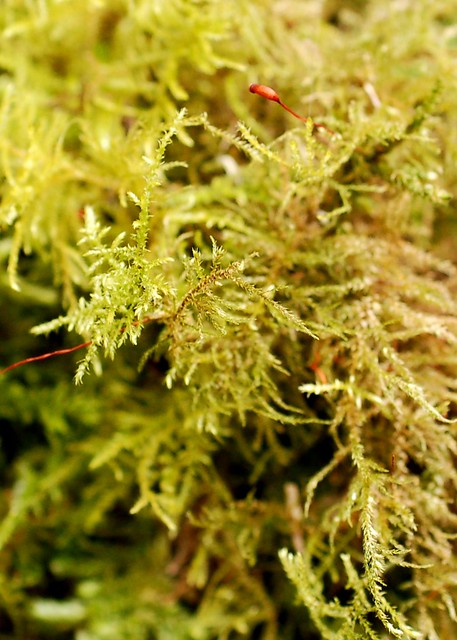
Creeping Feather-moss

Saturday, December 19, 2015
Black-Headed Gull
 |
| "Black-headed Gull from the Crossley ID Guide Britain and Ireland" by Richard Crossley - The Crossley ID Guide Britain and Ireland. Licensed under CC BY-SA 3.0 via Commons |
Purple Sandpiper
 |
| "Calidris maritima" by Andreas Trepte - Own work. Licensed under CC BY-SA 2.5 via Commons |
Sunday, September 13, 2015
Sea Club-Rush


This is Sea Club-Rush growing at Blackpill on Swansea Bay. It's binomial is Bolboschoenus maritimus. It likes brackish environments and has two distinctive leaf-like bracts, one considerably longer than the other. The corners of the triangular stems (sedge family) are scabrid (great word).
Meant to post yesterday but traveled to Budapest and got distracted.
posted from Bloggeroid
Friday, September 11, 2015
Sea Sandwort


Friday, September 04, 2015
Sea Spurge


This is another plant from the Welsh littoral: Sea Spurge, Euphorbia paralias. As you can no doubt tell, these are two different plants. It is found above the high tide mark but below the dunes in these cases. Euphorbias have weird flowers with round or crescent-shaped 'glands'. (Unfortunately these aren't clear in the photo.) The inflorescence is an umbel although this isn't as obvious as in the carrot family. They also have acrid latex which is obvious when the stems are cut.
Monday, August 31, 2015
Common Cord-grass


This is a genuinely interesting grass. No really. It is the primogenitor of saltmarsh succession, invariably the only plant to grow until it has trapped sufficient sediment to raise the land out of the tidal range inhospitable to the rest. Here it has formed a small patch of saltmarsh in Swansea Bay and was the only thing growing apart from seaweed.
It is also the best understood example of allopolyploidy: the creation of a new, fertile species from the hybridization of two species followed by chromosome doubling. Common cord-grass, Spartina anglica, has evolved from the sterile hybrid Townsend's cord-grass, S. xtownsendii. This is a hybrid of Small cord-grass, S. maritima, and Smooth cord-grass, S. alterniflora. So you get a lot of cord-grass for your buck with this tough little critter.
Smooth cord-grass was introduced from North America and the hybrid arose around Southampton in the mid nineteenth century. S. anglica was first noticed in 1892 and its vigour and sediment-trapping ability was soon recognised. Consequently it was widely planted around the coast as part of sea-defences and land-reclamation. It can grow seaward of every other perennial plant!
Sunday, August 30, 2015
Fox Moth


This little fella was crossing the road, one can only assume to get to the other side. It took a bit of sleuthing to identify, but it is an early instar of the Fox Moth, Macrothylacia rubi. It lives with remarkable views and plenty of food. After overwintering as a final instar it pupates around the end of March/April to emerge as the moth which flies until June.
Saturday, August 29, 2015
Wild Parsnip


The book says they are strong smelling, so I crushed a bit to check. Later it warns you that the sap is highly irritant, causing a nasty rash on exposure to sunlight. I can't help thinking the warning should have come first.
It is Wild Parsnip, Pastinaca sativa. It is generally classified as the same species as the vegetable but a number of different subspecies are recognised.
The plant contains useful chemicals, including coumarins and psoralens. The latter absorb UV light and are used in suncreams.
Friday, August 28, 2015
Marram Grass


 This is perhaps the most familiar plant of British dunes: Marram grass, Ammophila arenaria. It's extensive rhizomes stabilise the sand preventing drifting of the dunes. The plant was harvested in the past for various uses, including thatching and basket-making, but this led to dune movement and loss of arable land and villages, especially in Denmark. Laws were introduced in Scotland in the seventeenth century and Denmark in the eighteenth century to prevent its removal.
The genus name derives from the Greek ammos: sand, and philia: lover. It is an example of a xerophyte, able to tolerate drought through various adaptations that help reduce water loss: waxy covering; inrolled leaves with stomata on the internal surface only; stomata situated in small pits; hairs to slow air movement across the leaf surface.
Thursday, August 27, 2015
Sea Holly


Sea Holly must be the most striking plant of the dunes? This magnificent specimen of Eryngium maritimum was growing at the back of the beach at the Llangenith end of Rhossili beach. It caught my eye when the sun came out, silvery blue ruffs around the spiky inflorescence.
Wednesday, August 26, 2015
Wood Sage

Tuesday, August 25, 2015
Chough
 |
| "Pyrrhocorax pyrrhocorax -Penwith -Cornwall -flying-8b" by Andrew - originally posted to Flickr as chough. Licensed under CC BY 2.0 via Commons - https://commons.wikimedia.org/wiki/File:Pyrrhocorax_pyrrhocorax_-Penwith_-Cornwall_-flying-8b.jpg#/media/File:Pyrrhocorax_pyrrhocorax_-Penwith_-Cornwall_-flying-8b.jpg |
Betony


Catching up on missed posts: this is Betony, Stachys officinalis, growing amidst the bell heather and western gorse beside the coastal path.
The specific name indicates longstanding usage by the herbalists. The Romans thought it protected against sorcery and later it was used to thwart witchcraft.
Rock Sea-spurrey


This was a new one for me and it's taken a little while to find it in the books. Close up it has exquisite little flowers and is densely covered in glandular hairs. It was growing right on the coastal path at the base of one of the stone 'steps' put in by the National Trust team.
It is Rock Sea-spurrey, Spergularia rupicola, a member of the Caryophyllaceae family (Chickweeds, Pinks and Campions).
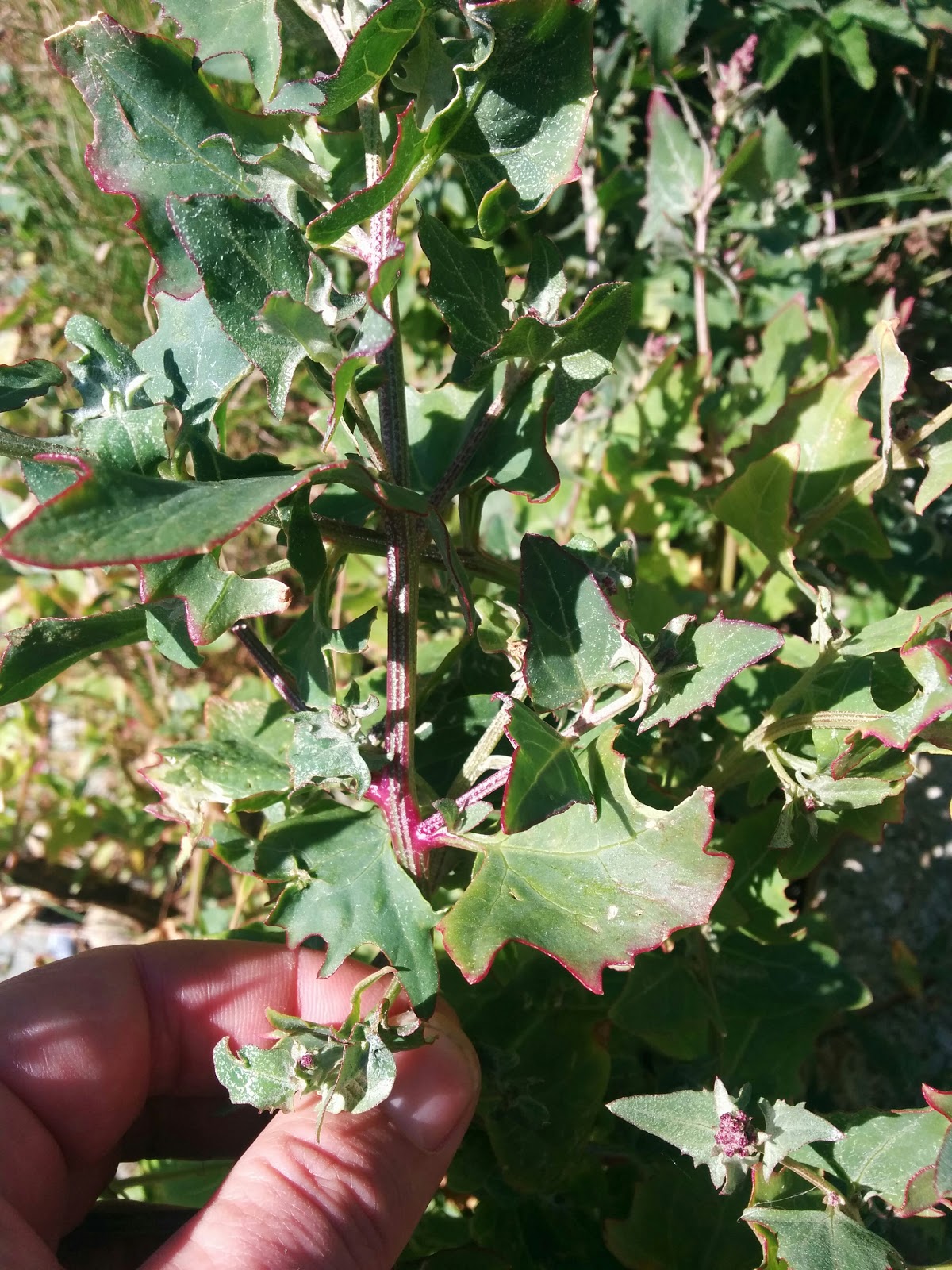
Babington's Orache


Rock Samphire


Another coastal plant growing on a headland near Caerfai Farm. This was taken late on our last day. That night a cold front blew in and changed things utterly: high winds and torrential rain.
This is Rock Samphire, Crithmum maritimum, which is an unusual member of the Umbellifer family in that it has fleshy stems and leaves, like cacti. It is confined, as the binomial suggests, to coastal locations. Oddly it isn't found between the very north of Scotland and Suffolk.
Sunday, June 07, 2015
Buck's-horn Plantain

This caught my eye on the littoral not far from yesterday's plant. It's buck's-horn plantain or Plantago coronopus.
The coast is where one would expect to find it, but it is also found elsewhere. Roadside verges, for instance, where salt and sand also co-mingle. In fact the first time I saw this plant it was growing between kerbstones at our local bus stop.
Saturday, June 06, 2015
Sea Kale


Nearly went to bed without posting so this is just a quickie: sea kale, Crambe maritima. There is an impressive display on the shingle beach between Newhaven and Seaford with more prolific flowering than I can remember. It used to be a delicacy, the young leaves blanched and eaten like modern cabbage and kale. Although often plentiful in the places where it is still found, overall it has declined enormously.
Monday, May 04, 2015
Thrift


This Ameria maritima is growing on the soft chalk cliffs at Hope Gap between Seaford and Cuckmere Haven. We went yesterday to see if we could find some fossils. We found one which we decided was probably a sea urchin or closely related creature.
Subscribe to:
Posts (Atom)