Musings

Sunday, December 20, 2015

Great Cormorant

Crossley ID Guide
Plenty of these in the Ouse Valley. They nest colonially on a tiny island in a small lake made by the owner of a local farm. The vegetation has been ruined through shear numbers. The Great Cormorant, Phalacrocorax carbo, is not to be confused (but often is) with the Shag, most notably by Christopher Isherwood in his poem The Common Cormorant.

Creeping Feather-moss

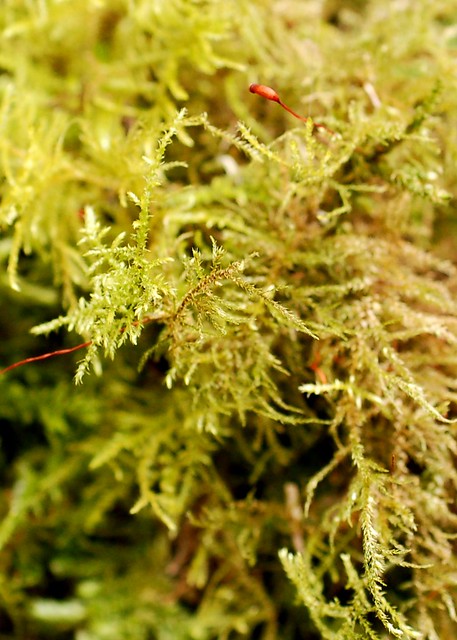
Amblystegium serpens (Creeping Feather Moss)
Photo: Bob Osborn (via Flickr)
The problem with mosses is that it's very difficult to show them well in photographs. I was going to take a photo through the microscope but it didn't come out well and wouldn't be that instructive. This is a moss collected growing on the site of a WWI sea-plane hangar at Newhaven. (Well it's not the actual moss but the same species.) This time keying it out was a bit simpler - Creeping Feather-moss, Amblystegium serpens. It's very common and usually found on living or dead wood, but also on soil and stones, the bases of walls and tarmac.

Saturday, December 19, 2015

Rook

"Corvus frugilegus -Dartmoor" by Brian Snelson Licensed under CC BY 2.0 via Commons
I've noticed that some Rooks, Corvus frugilegus, are already nest building and possibly even sitting on eggs. It's such a mild winter that this can happen, although a cold snap can be catastrophic for the young if it is prolonged after hatching.


Black-Headed Gull

"Black-headed Gull from the Crossley ID Guide Britain and Ireland" by Richard Crossley - The Crossley ID Guide Britain and Ireland. Licensed under CC BY-SA 3.0 via Commons
There were plenty of these around today down at Newhaven and roosting on the Lewes Brooks RSPB reserve earlier in the week. The 'black' heads of the Black-Headed Gull, Chroicocephalus ridibundus, is in fact chocolate brown and only seen in the breeding season. They have black wing tips which distinguishes them from the similar Mediterranean Gull. The latter also has a heavier bill without the black tip and a truly black hood which extends further down the nape.

Purple Sandpiper

"Calidris maritima" by Andreas Trepte - Own work. Licensed under CC BY-SA 2.5 via Commons
Saw about eight of these little chaps milling about on the lowest parts of the east arm of Newhaven harbour. They are funny to look at with their short legs and dumpy bodies. The slightly down turned beak and beady eye gives them a somewhat shifty appearance. There's something incongruous about their habit of pootling about where the mighty ocean crashes into the land right next to them. The Purple Sandpiper, Calidris maritima, isn't particularly purple even in its breeding plumage. It breeds on Arctic islands and most don't come as far south as Sussex. Their loss from this county is possible with continued global warming, although some regularly overwinter in Portugal.

Tuesday, December 15, 2015

Pointed Spear-moss

CiarĂ¡n Byrne @kiwibyrne  

This grows (abundantly) in my lawn and I've tried a couple of times before to identify it. The last time was probably February, which was probably the last time I'd got the moss book out. It was a eureka moment to finally pin it down but not before I'd arsed about in the acrocarp keys: what an idiot! It's a pleurocarp of course. That's what happens when you don't know what you're doing and you don't start at the beginning.
Anyway, having dissected it under the stereomicroscope and looked at the cellular structure of the leaf under the compound microscope, I could have identified it without either if I'd just followed the key.
It is Pointed Spear-moss, Calliergonella cuspidata. I've nicked the photo from Ciaran Byrne's twitter feed. Ciaran is an amazing ecologist and prolific tweeter. I would urge anyone with Twitter access to follow him.

Monday, December 14, 2015

Floating Sweet-Grass

This is Floating Sweet-Grass, Glyceria fluitans, doing what it says on the tin. It is common in slightly nutrient enriched fresh water ditches where it forms rafts, as seen here.

Watercress

This is Water-cress, Rorippa nasturtium-aquaticum, which is common in the ditches around the reserve. The Latin name gives away its culinary comparison with nasturtium - a peppery flavour. Care should be taken if eating wild Water-cress as it can harbour the cyst stage of liver-fluke, a parasite of sheep and cattle. Only take it from a stream with running water where there are no grazing animals.

Broad-leaved Pondweed


It's been so mild that there is quite a bit of growing going on out there. This is Broad-leaved Pondweed, Potamogeton natans, growing in one of the many ditches. It's only in this ditch that I've come across it, unlike the ubiquitous Lemma minuta. The pondweeds are a tricky group with around twelve species. This is fairly easy to identify because the leaves float and there is often a discoloured joint at the end of the long leaf-stalk.


Black-Tailed Godwit

By Richard Crossley (Richard Crossley) CC BY-SA 3.0 via Wikimedia Commons
I was doing the WeBS survey down on Lewes Brooks RSPB reserve this morning. There was no wind and it was cold but not crisp. Still few wildfowl, just mallards and a handful of wigeon and teal. But the lapwing were there in numbers, around 200 or so, and when the flock was in the air I noticed another bird flying with them. It looked like an oversized snipe but the trailing feet, clear black terminal band on the tail and white trailing edge of the wings showed it to be a Black-Tailed Godwit, Limosa limosa. It is unusual to see a solitary bird and I think this was the first time I'd seen one on the Brooks. The birds in the UK are of the Icelandic race, L. l. islandica. It calls repetitively in flight.
The similar Bar-Tailed Godwit has a barred tail (no, really) and an equally long beak which has a slight curve upwards. The Black-Tailed Godwit has been Red-Listed since 1996 but the numbers overwintering in Sussex have been increasing over the last 20 years with Pagham and Chichester harbours holding around 3% of the national total. 
 

Thursday, December 10, 2015

Red Campion

"Red campion". Licensed under CC BY-SA 3.0 via Commons
Bizarrely I didn't take a picture of Red Campion, Silene dioica, so this is from the amazing resource that is Wikipedia. Red Campion is a bit more widespread than White Campion, growing up to 1000m altitude whereas White Campion is confined to lowland areas, especially those with calcareous soils. It grows at the back of the pond in the garden.

White Campion


Another plant I can't believe didn't get blogged before. The campions, Silene, are a familiar genus. Red Campion is probably best known, but White Campion, Silene latifolia, is also widespread. It can be confused with Bladder Campion and, by the sea, Sea Campion, which both have white flowers. White Campion is usually very hairy. It is also dioecious - having separate male and female plants.

Tuesday, December 08, 2015

Japanese Knotweed

This is the dreaded Japanese Knotweed, Fallopia japonica, introduced from Japan in 1825 and causing problems ever since. In my native Swansea it was a spectacular problem. Entering the city by train you passed through seemingly endless groves of it. It is listed by the World Conservation Union as one of the world's worst invasive species. In Australia it is actually illegal to have it growing on your property. This was growing on the edge of Amberley Brooks in West Sussex.

Grove snail


This is a common snail which can have be found with a wider variety of patterns. Cepaea nemoralis is known as a Grove snail or Brown-lipped snail and is a terrestrial, pulmonate, gastropod mollusc. Nice.

Sunday, December 06, 2015

Cinnamon Bug

This is a hemipteran bug from the Rhopalidae family: the Cinnamon or Black & Red Squash bug, Corizus hyoscyami. It is pretty common but can be confused with other red and black bugs like Firebugs, which are rare here but common on the continent.

Saturday, December 05, 2015

Straw Foxglove
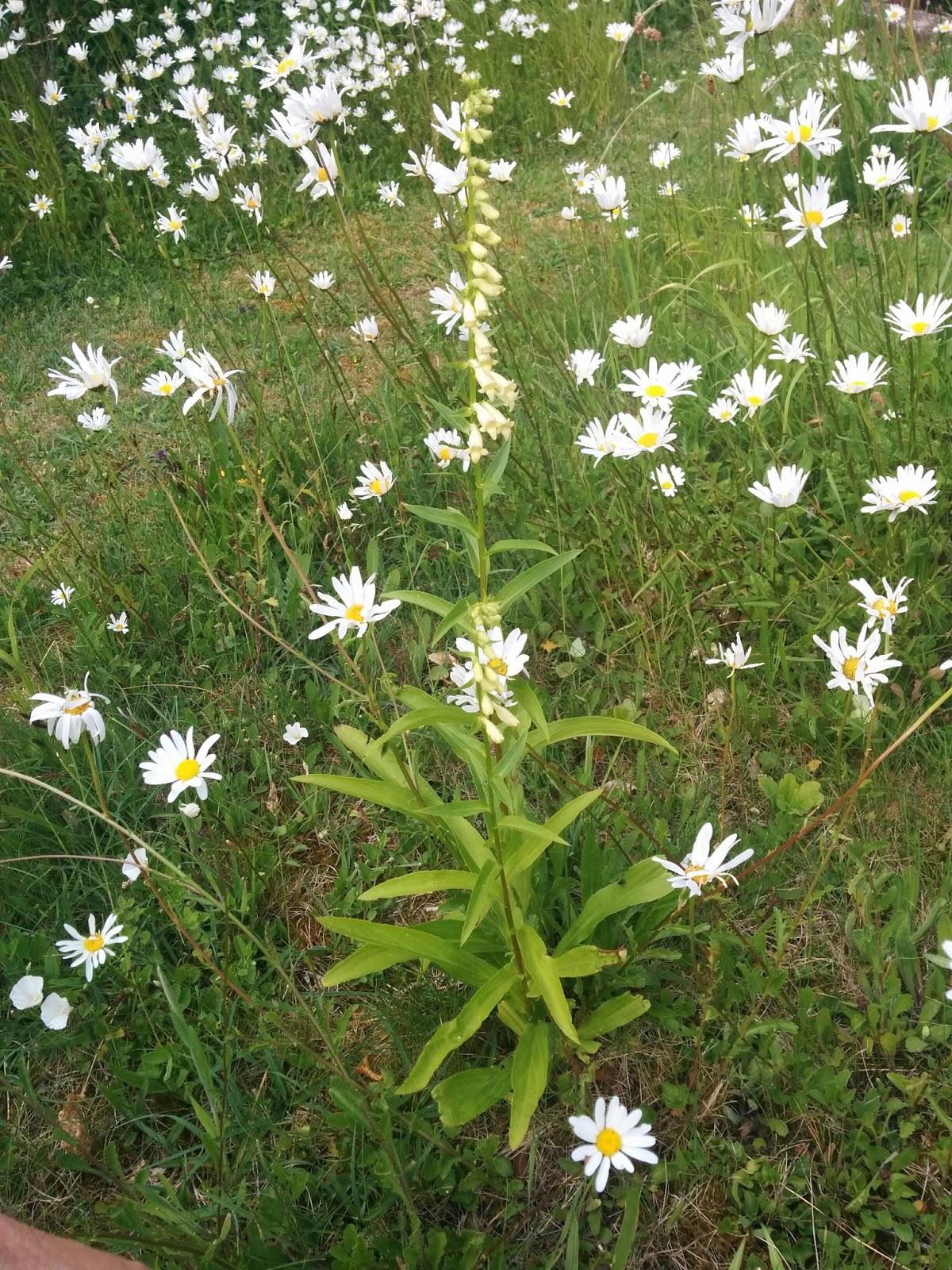


This appeared in our front lawn back in June. It looked like a foxglove but not like any foxglove I'd seen before. I did have a cursory look in the books to see if I could find it but failed to find it. Reviewing the year's photos I came across it again and this time I've found it. It's Straw Foxglove, Digitalis lutea, an introduced species that has naturalised in the south of the country. It's actually rather rare, as this BSBI map indicates, and there hasn't been a record in Sussex since 2010 when it was noted in Brighton.
The flowers are distinctly those of the Figwort family, Scrophulariaceae. The most striking feature is the extremely hairy corolla.

Friday, December 04, 2015

Common Spotted-Orchid


Here's another common plant: the Common Spotted-Orchid, Dactylorhiza fuchsii. It has transversely elongated spots on its leaves (hence the name) which help distinguish it from Early Purple-Orchid, which has longitudinally elongated spots, and Heath Spotted-Orchid, which has circular spots. These plants were found on the same day, not far from each other,  illustrating the range of colours and patterns found within this species.


Burnet Companion

This day-flying moth was spotted enjoying the nectar from Horseshoe vetch up on the Downs. It's Burnet Companion, Euclidia glyphica, and is reasonably common down south, especially on chalk grassland.

Wednesday, December 02, 2015

Woodbine

I didn't realise that Woodbine was a synonym for Common Honeysucke, Lonicera periclymenum. I was also suprised I hadn't already blogged this as it's a lovely and common plant. There turn out to be lots of photos of plants taken in the middle of the year when there was an abundance in flower which I didn't have 'room' for at the time. 
Honeysuckle is famous for its scent, which is strongest at night to attract the long-tongued moths that pollinate it. They can detect it from quarter of a mile away (how is that known?).

Tuesday, December 01, 2015

Heath Spotted-Orchid


Although similar to the commoner Common Spotted-Orchid, this is Heath Spotted-Orchid, Dactylorhiza maculata, growing in fairly boggy ground in a ghyll in Ashdown Forest just next to the Lesser Skullcap posted recently. All orchids seem exciting. There's something exotic about them despite their abundance.